01
Symptoms are usually too small
Teams often name the loudest complaint and then optimize around it. The book pushes them to inspect the wider issue stack.
 AI, through a human lens
New Book / 新书
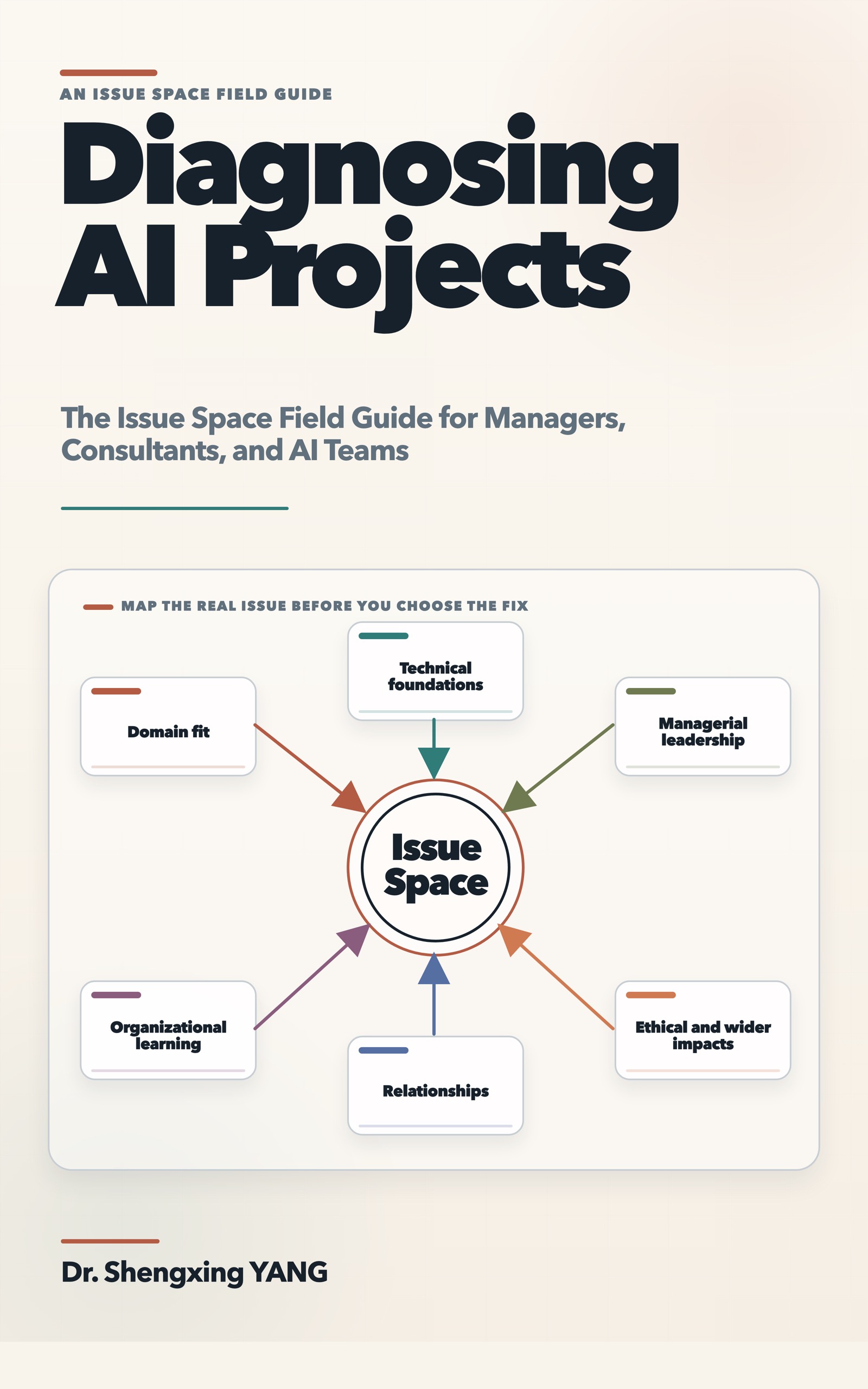
The Issue Space Field Guide for Managers, Consultants, and AI Teams
Most AI projects do not fail because teams refuse to act. They fail because teams act on a shallow diagnosis.
This page gives a faster public-facing entry into the book: what the method does, what the visuals show, and where to open the reading sample or the regional Amazon links.
Who it is for
Managers, consultants, transformation leads, and AI teams who want clearer judgment before scaling tools, hiring, or governance layers.
In One Paragraph
Diagnosing AI Projects is a practical book about AI project diagnosis. It introduces the Issue Space method so managers, consultants, and AI teams can test a complaint across six dimensions before they buy another tool, hire in the wrong place, or mistake symptoms for causes.
Why This Book
Instead of treating "data", "talent", or "trust" as separate labels, the book reframes AI trouble as a compound problem that needs a structured diagnostic pass first.
01
Teams often name the loudest complaint and then optimize around it. The book pushes them to inspect the wider issue stack.
02
The right response may be governance, sequencing, reframing, training, or coordination, not necessarily another tool purchase.
03
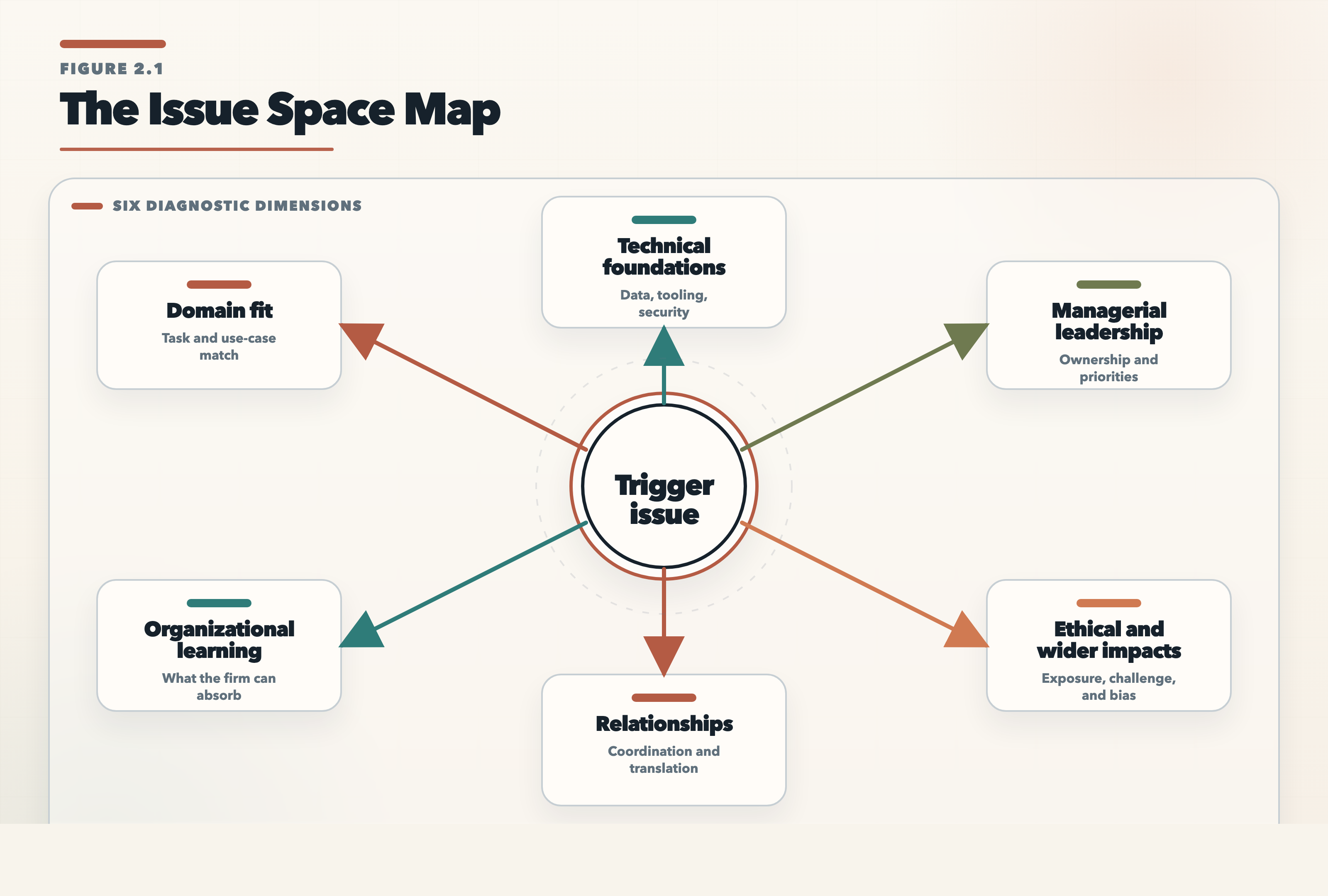
It gives teams a shared way to map domain fit, technical foundations, managerial leadership, organizational intelligence, relationships, and wider impacts.
Loop View
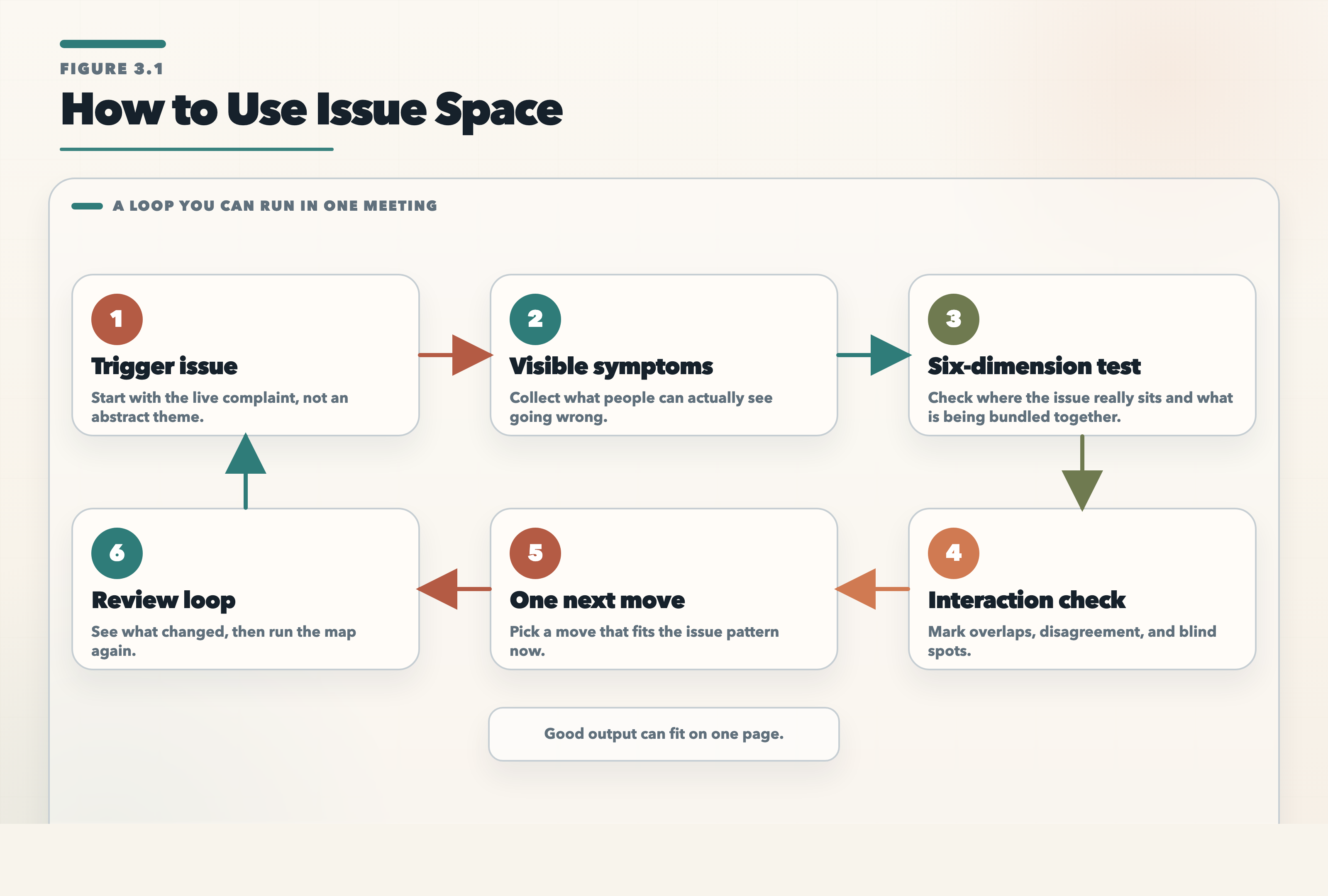
This is a cleaner public-facing version of the Chapter 3 method logic: start with the live complaint, move through diagnosis in sequence, then review and re-enter instead of freezing the first answer.
Example Trigger Issue
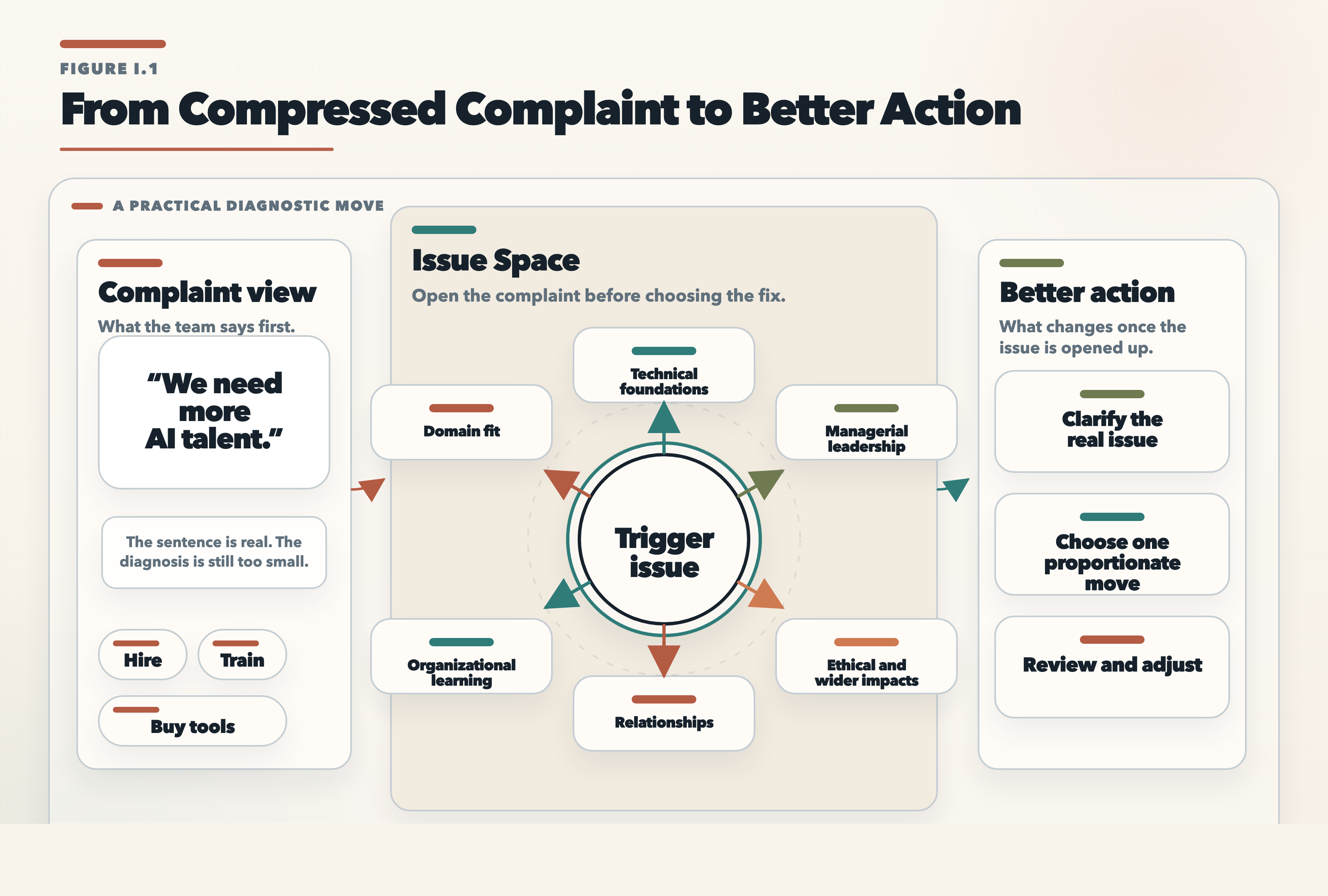
"We need more AI talent." The method does not reject this sentence. It uses it as an entry point, then tests whether the real blockage is talent, use-case definition, ownership, training, or something else entirely.Step 1
Capture the live sentence people are already using before anyone hides the problem inside a polished solution.
Step 2
List the rework, drift, mistrust, delays, and ownership friction before interpretation takes over.
Step 3
Run the complaint across the six dimensions so diagnosis expands before action narrows again.
Step 4
See which dimensions reinforce each other and where the real blockage actually sits.
Step 5
Pick the next move that matches the diagnosis, not the loudest internal narrative or the easiest purchase.
Step 6
Watch what changed, keep what clarified the issue, and reopen the loop if the complaint was only partly solved.
Why Step 1 Matters
If the trigger issue already contains the solution, the rest of the method becomes biased from the first minute.
Why Step 3 Matters
The same complaint can lead to very different action paths once it is tested across multiple dimensions.
Why Step 5 Matters
The method earns its value when the next move becomes more proportionate, more defensible, and less wasteful.
Visual Excerpts
These visuals are pulled from the current book export and shown here without hard cropping, so the full diagram stays readable.
Reading Paths
The sample provides a concise introduction to the method. The full edition brings the field guide together, while the toolkit provides a reusable canvas and workshop script.
Choose the storefront yourself if direct market detection is unreliable. The highlighted option is only a suggestion from your browser locale.
Quick Answers
A few answers about the method, who it helps, and where to start reading.
It means diagnosing an AI complaint across domain fit, technical foundations, leadership, organizational intelligence, relationships, and wider impacts before choosing the response.
Issue Space is a six-dimension diagnostic method for unpacking messy AI project complaints before teams commit to the wrong response.
The book is written for managers, consultants, transformation leads, and AI teams who need clearer diagnosis before scaling tools, hiring, or governance changes.
A public reading sample is available at Bookreadingsample.pdf.
Personal Extension
The book helps diagnose AI projects, team complaints, and organizational pressure points. The assessment extends the same logic to an individual question: where do you stand inside an AI transition?